There is a particular kind of silence that shows up when your family and friends stop believing in you. Someone asks how you’re doing, and you give the answer you’ve rehearsed. “Good, just working on some things.” They nod, you nod, and you both move on to something easier. Meanwhile, your energy has been gone for months, you have no way to prove it, and the body sitting in that chair looks completely fine.
That was my life for the better part of a decade. I was still fit, my skin looked okay, and nothing about me said sick. What my family and friends could see was more of a mental decline than anything else, and I could feel the quiet adjusting of expectations. Nobody announces it when belief runs out. It shows up in the questions they stop asking and the careful way they change the subject.
I couldn’t blame them, because I couldn’t explain it myself yet. This is the story of how I got there, and what I did when the belief around me ran out.
It started in 2017, with a big decision
In 2017 I made some big changes. I left Silicon Valley, started working remotely, and entered a few entrepreneur and business owner circles. For my whole life I had been following the script, and I wanted to start building the life I knew, deep down, that I was capable of. I had an “I can do anything” attitude. Whenever I met someone who had successfully done something, I thought, well, if they can do it, then I can do it.
That part is true. People can do remarkable things. But there was a big piece I could not see at the time, and it is the piece that nearly everyone leaves out: how different someone’s body, and the state of their nervous system, is while they are accomplishing their goals.
Mindset was only half of the equation
Almost every coach, book, and podcast focuses on mindset. I thought I had done all of that work, and honestly I had done a lot of it. But your body set matters just as much. Your health and the state of your nervous system are huge factors that sit well beyond mindset, and mine were in dire shape.
The engineer in me now describes it like this. You can write the best software in the world, but if the hardware it runs on is overheating and throttling, the performance will never match the code. I had upgraded the software for years. Nobody had looked at the hardware, including me.
The cascade I could not see the full extent of for eight years
After I chose to change my life, I was hit with a cascade of events that I would not fully understand until eight years later. I picked up a tropical infection in Costa Rica. I took care of my dad after his brain cancer diagnosis, which was the most stressful thing I have ever been through. I took a toxic antibiotic called Cipro, which led to what people call being floxed. I injured my neck. I lived in mold and water-damaged buildings for seven years. Over time I was dealing with parasites, leaky gut, and biotoxins circulating through my body, and eventually I found out I was living with CIRS and actinomycetes.
Any one of those things alone could be enough to distract somebody from their goals. The combination was devastating. And underneath all of it, my nervous system had been dysregulated pretty much since I was a child. A regulated nervous system is part of what keeps a person out of the kind of chronic conditions I spent the next eight years in, and mine was not regulated. If you want the fuller story of how one piece of this began, I wrote about it in Floxed: How Cipro Damaged My Mitochondria and Led Me to Somatic Healing.
Fighting invisible battles
I did not know any of this until recently, or how all of the pieces fit together. So for most of those eight years, I was fighting invisible battles. I could tell internally that something was badly wrong, but I could not point to it, and I could not prove it to anyone, which meant I mostly could not talk about it. The rehearsed answer was the only one I had.
That is a hard place to be. It is hard when you cannot talk about these things with friends and family. It is hard when your family believes you are going about things the wrong way, especially when their philosophy is to follow the script rather than to find what works. And it is hard when your friends are becoming more successful in their businesses and in their family lives, and some of them are starting families of their own, while you do not have the energy for much growth beyond constantly researching your problems and where they might be coming from.
It was a lonely decade. I am sure a lot of people lost faith in me along the way, and there were times I might have lost faith in myself too. I will not pretend otherwise, because I think the pretending is part of what makes this so isolating for people.
What I did when the belief around me ran out
At some point I had to start looking for better reasons to keep fighting. I had to find belief in my own future, and my own reason to believe there was something positive in all that was happening to me, even if I could not see it yet. Nobody was going to hand that to me, and I stopped waiting for them to.
What helped was my mindset as an engineer. I like looking for root causes and building solutions around them, and that instinct kept me moving when motivation did not. I can’t tell you the number of rabbit holes I went down, or the number of pieces of paper covered in attempts at feeling better that I scratched out because they did not work. I also can’t tell you how many “ezperts” I talked to. Some of them were wonderful, and some of them confidently pointed me in the wrong direction, which is its own kind of tiring.
I do have to thank AI for being my companion through the research. It helped me ask better questions about what the heck was going on with me and what I could do about it, and it eventually pointed me to where I am today, which feels like the right direction. A couple of weeks after its latest suggestion about what might be going on, I am already feeling better and getting my energy back.
Why a toxic environment keeps your nervous system switched on
Living with a toxic bacteria that is not only on your skin, but in your car, your clothes, your room, and your other belongings, can have a real impact on your life. You basically cannot get away from it. You do not have a safe place to be, to sit, or to sleep. Your body is under constant attack and constant exposure, and your immune system never gets a break.
That leaves your nervous system switched on in the sympathetic side of the polyvagal spectrum, the part built for emergencies. It also keeps your gut lining from fully recovering, so the food you eat continues to add to your system’s inflammation, and that is only part of it. The details are endless, and the impact on my life has been indescribable. I share this not as a medical claim about what will happen to you, but as a picture of how a body that never gets to stand down can quietly erode a person’s drive, and how easy that is for the people around them to misread as a lack of effort.
If the people around you have stopped believing
If you are in a version of this right now, here is what I would offer from the far side of it. You do not need your family and friends to believe in you in order to begin. You do need a more accurate picture of what your body is carrying, because willpower aimed at the wrong problem will wear you out and make the doubt around you louder.
It also helps to remember that they are probably not doubting you out of cruelty. They are looking at what they can see, and they are measuring it against the script they were taught. Their doubt tells you how much of your experience is invisible. It does not tell you what you are capable of.
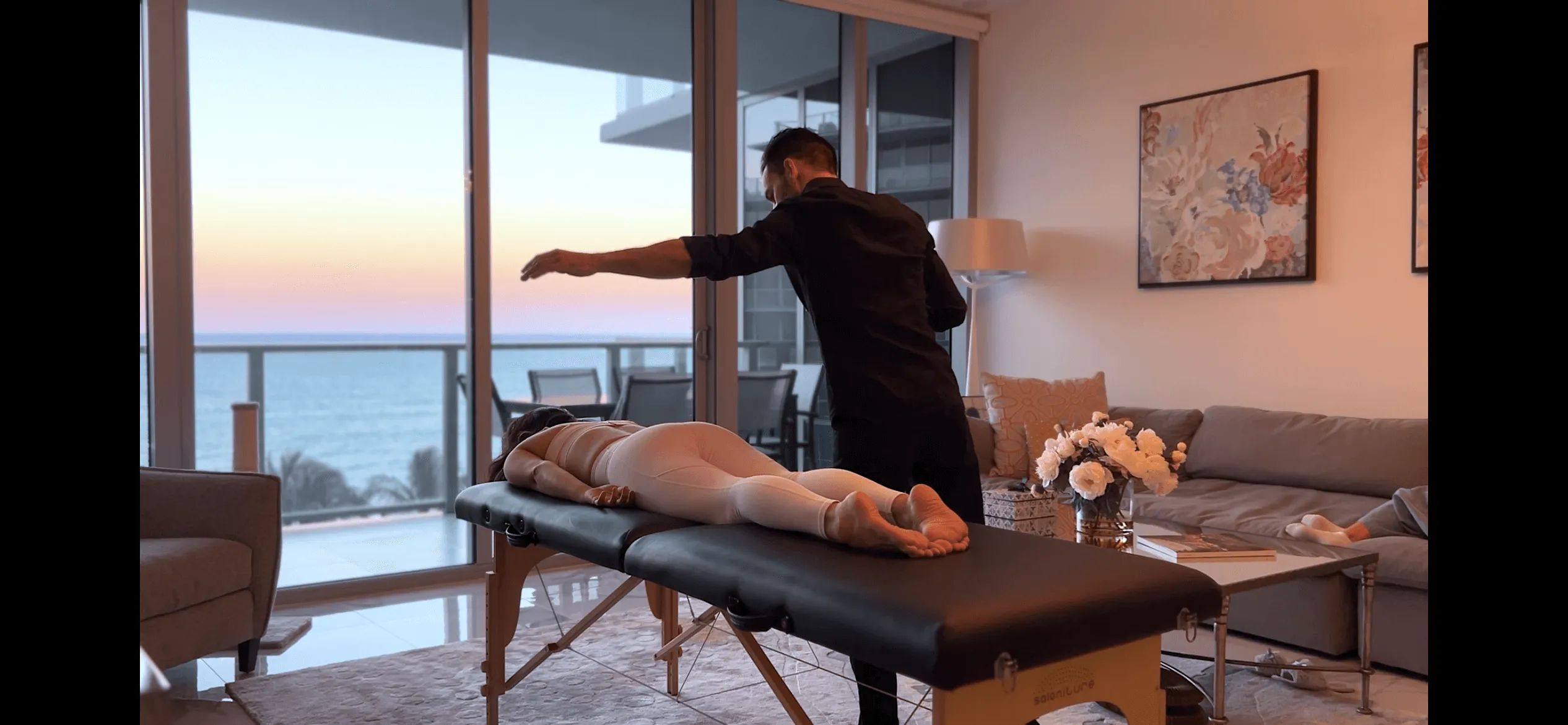
What changed things for me was treating the stress and the nervous system as a root cause to be addressed directly, rather than another symptom to manage with more effort. That is the same thinking behind the work I do now. The mental noise can be undone, and so can a lot of the stress your body has been holding for years.
Frequently asked questions
- Is feeling unsupported by family and friends a sign I am on the wrong path? Not necessarily. People who follow the script tend to judge anyone who leaves it, and the doubt usually says more about their frame of reference than about your direction. What matters is whether you are testing your approach honestly and adjusting when something does not work.
- Is a nervous system that stays on high alert just a mindset problem? No. Mindset matters, but the state of your body is its own variable. A nervous system stuck in the sympathetic side can drain your energy and focus no matter how good your attitude is, which is why positive thinking alone tends to fade.
- How is this different from talking to a therapist or meditating? Therapy works through conversation and meditation trains attention, and both can be valuable. The work I do goes after the physical stress your body is holding, without needing you to talk it through or quiet your thoughts first.